Titel: Evidence for immigration in the Batavian region in the pre-Claudian Era. The study of large handmade pottery assemblages in Tiel using a combination of traditional and science-based techniques
Thema: In the Batavian region, most pre-Roman handmade pottery was locally produced and embedded in a strong regional framework, following ancestral traditions. After the Roman conquest, however, these well-known ‘pottery style groups’ and typologies were largely replaced by new vessel types, decorations and technological characteristics. Traditionally, these characteristics have been used as a tool to attribute pottery to a specific ‘pottery style’ or to an ethnic group, in an attempt to reveal the provenance of the pottery.
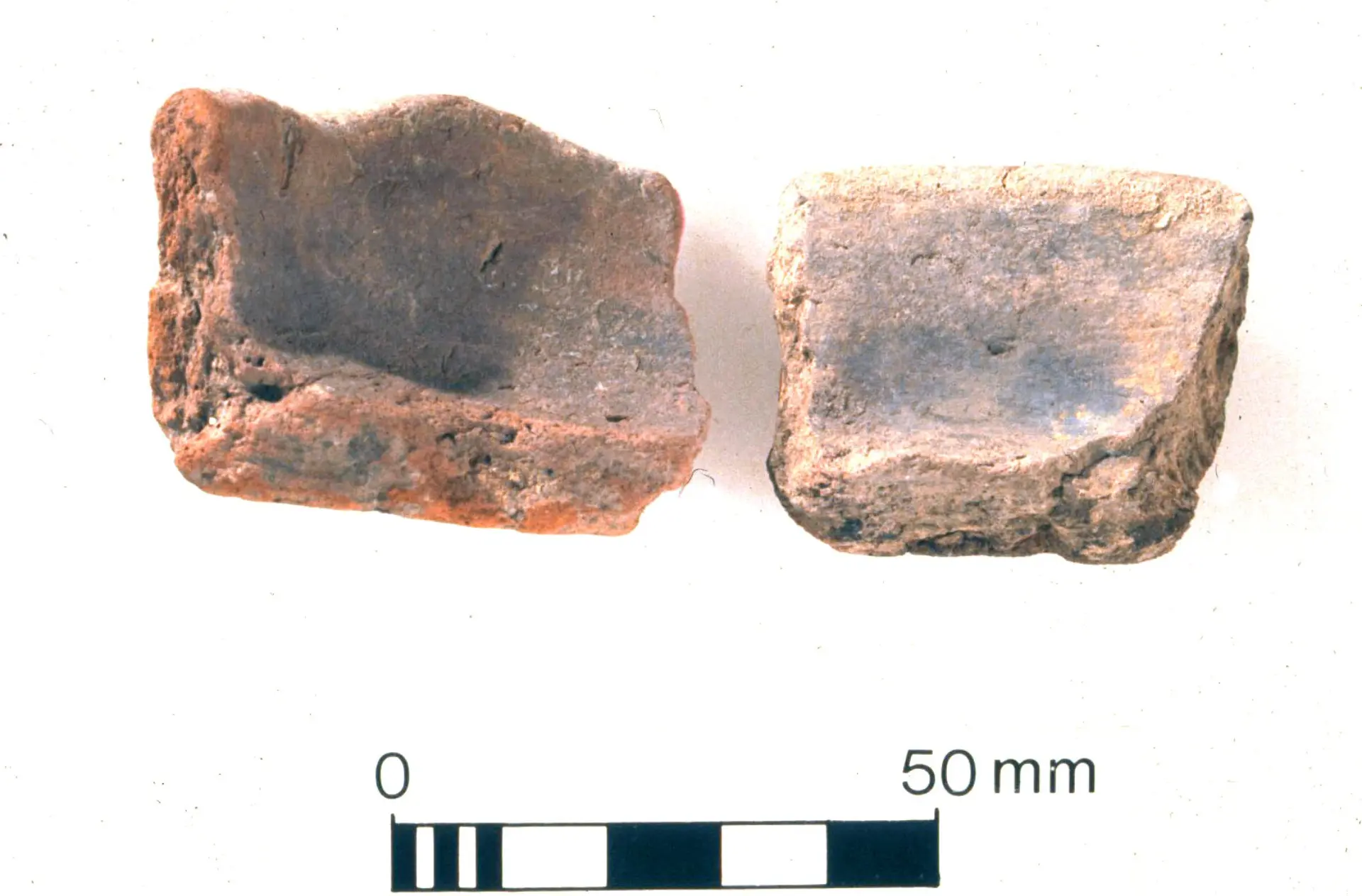
In this paper, we will present the potential of a multidisciplinary approach, combining scientific methods (petrography, WD-XRF, SEM-EDS and MGR) with traditional stylistic and technological analysis (e.g. vessel type, tempering, and decoration), challenging the constraints of a predominantly stylistic approach. This method was tested in a pilot study, where we analysed over 12,000 sherds from well-dated assemblages in the Tiel region.
Most of the sherds we studied, proved to be non-local. Moreover, the pottery provenance is very heterogeneous. A whole array of provenance regions and (hybrid) styles as well as inter-site variation strongly suggest a high degree of mobility and a diverse composition of society across a wide region. Such high quantities of non-local pottery should most probably be understood as having been brought to the Tiel region by immigrants taking their entire household with them. The small number of samples that were produced locally shows a mix of ‘style elements’, demonstrating the mobility of ideas and traditions, most probably introduced by the same immigrants. Comparable indications of hybridity were also observed in house architecture.
About Julie Van Kerckhove: Julie studied Roman archaeology at the university of Ghent (Belgium) from 1998 to 2002. From 2004, she started working as a pottery specialist for VUhbs archeologie, a company which is allied to VU University Amsterdam (the Netherlands). In 2011, she started her PhD at VU University Amsterdam, on the Roman pottery from the villa of Hoogeloon in the South of the Netherlands. She hopes to defend her PhD “Pottery consumption in a peripheral region of the Roman Empire. The ceramic evidence from the villa of Hoogeloon in comparison with other rural settlements in its vicinity” this year. Since 2016 she owns her own company Aardewerk & Archeology, where she works as a pottery specialist for archaeological companies, universities, municipalities and museums. In her work as a pottery specialist, she focusses on a regional approach using provenance studies to research connectivity and immigration. She mainly studies pottery from the Late Iron Age and the Roman period.
About Gerard Boreel: He studied physical geography (University of Utrecht) and also works for Aardewerk & Archeologie as a specialist in stone, building materials, slag and provenance studies. For this research, he was involved in establishing a strategy for the provenance studies which can be applied to our regions.